
17 June 2026
C-Section Scars and Back Pain: The Hidden Link Between Scarring and Physical Symptoms
A scar can be healed, but not fully rehabilitated
For many women, a Caesarean section marks the beginning of a new chapter in life. The focus understandably shifts to caring for a newborn, adjusting to motherhood, and recovering from surgery. Once the wound has closed and the scar appears healed, most women are reassured that recovery is progressing as expected.
Yet months or even years later, many continue to experience symptoms they never connect back to their C-section. Persistent lower back pain, abdominal tightness, a feeling of pulling across the lower abdomen, discomfort during exercise, reduced core strength, numbness around the scar, or a sense that their body simply does not move in the same way it once did.
What many women are never told is that healing and rehabilitation are not necessarily the same thing.
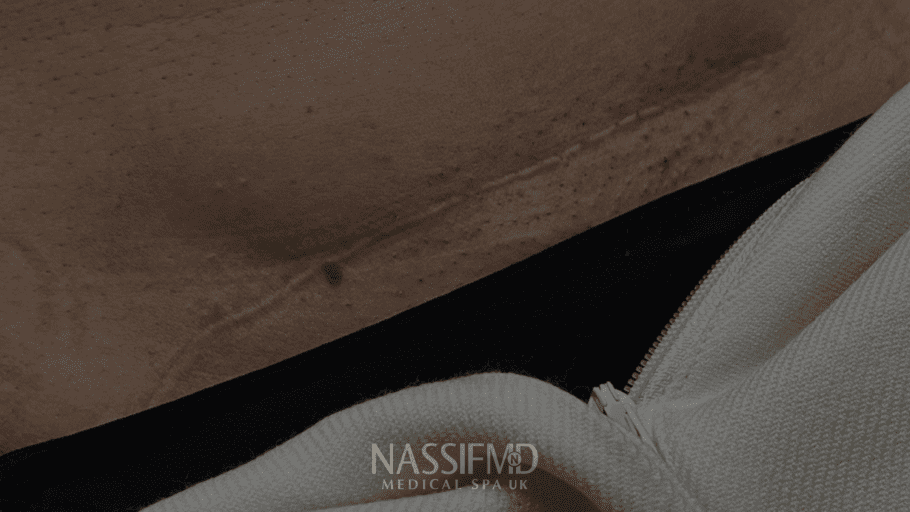
A scar can look healed on the surface whilst the tissues beneath remain restricted, tight, or functionally impaired. This is one reason why the conversation around C-section recovery needs to extend beyond wound closure and scar appearance.
What actually happens during a C-section?
People are often surprised to learn how much is involved in a Caesarean birth.
A C-section is not a single incision through the skin. It is a major abdominal operation involving multiple layers of tissue, each of which must heal and remodel following surgery.
The procedure involves seven layers. The first layers include the skin, fat and fascia, which is the connective tissue that supports and surrounds structures throughout the body. Deeper layers involve the abdominal wall, the connective tissues within the abdomen, the uterus and finally the amniotic sac.
Whilst the visible scar may appear relatively small, the body has undergone significant trauma in order to safely deliver a baby.
Every layer that is cut must heal. Every layer forms scar tissue. Every layer has the potential to influence how the body functions afterwards.
This is why recovery is about much more than what can be seen on the surface.
Why scar tissue matters
Scar tissue is a normal and essential part of healing. Without it, wounds would not close and surgery would not be possible.
However, scar tissue is different from the tissue it replaces.
Its purpose is to repair and stabilise an area as efficiently as possible. The body prioritises strength and repair, not necessarily flexibility, movement, or optimal function.
As a result, scar tissue is often denser, less elastic and less organised than healthy tissue.
For some people this creates very few issues. For others, it can contribute to ongoing symptoms that are often dismissed or attributed to something else entirely.
The key reason for this lies within the fascia.
The role of fascia in recovery
Fascia has become an increasingly important topic in rehabilitation and movement science, yet many people have never heard of it.
Fascia is a continuous network of connective tissue that surrounds and connects muscles, nerves, organs, blood vessels and joints throughout the body. Rather than existing as separate parts, the body functions as an interconnected system, with fascia acting as one of the structures that links everything together.
Healthy fascia is designed to move. It slides and glides between layers of tissue, allowing movement to occur smoothly and efficiently.
When surgery takes place, that system is disrupted.
As scar tissue develops, the normal movement between tissue layers can become restricted. This reduction in movement, sometimes referred to as a loss of fascial glide, can create tension throughout the surrounding area.
Because fascia is connected throughout the body, restrictions in one location do not always stay in one location.
The effects can be felt elsewhere.
Why a C-section scar can contribute to back pain
One of the most misunderstood aspects of scar tissue is that it does not simply remain isolated to the area where it formed.
As scars mature, they naturally contract. This is a normal part of healing. The body uses this process to strengthen the repaired tissue.
However, contraction can also create tension.
A useful way to think about this is to imagine a knot tied in a piece of fabric. The knot itself may be small, but it changes the tension throughout the surrounding material.
Scar tissue can behave in a similar way.
A C-section scar sits within a region that plays a crucial role in core stability, pelvic positioning and the transfer of forces throughout the body. If movement becomes restricted around the scar, the body often adapts by changing the way it moves elsewhere.
These adaptations are not always obvious. In fact, they are often unconscious.
Over time, however, the lower back, hips, pelvis and abdominal wall may begin to compensate for the restriction. Increased tension develops in some areas whilst weakness develops in others.
This is one reason some women experience persistent lower back pain long after surgery, despite having no obvious issues with the scar itself.
The body is remarkably good at finding ways to work around restrictions. The problem is that these compensation patterns can sometimes create new symptoms elsewhere.
The symptoms women often don’t associate with their scar
One of the reasons C-section scars are frequently overlooked is that symptoms rarely appear in the way people expect.
Many women do not complain about the scar itself.
Instead, they describe ongoing lower back discomfort, tightness through the hips, difficulty engaging their abdominal muscles, or a feeling that their body never fully returned to normal after pregnancy.
Others notice numbness around the scar years later. Some experience sensitivity when clothing touches the area. Others feel a pulling sensation during exercise, stretching, or even when standing fully upright.
Many simply assume these symptoms are a normal consequence of childbirth.
Whilst there can be many contributing factors, scar tissue is often a missing piece of the puzzle that has never been assessed.
Understanding adhesions
Another important consideration is the development of adhesions.
Adhesions occur when scar tissue forms between structures that would normally move independently of one another.
Following a C-section, tissues that once glided freely can become tethered together during the healing process. This may occur between layers of fascia, muscle and surrounding structures within the abdominal wall.
Not all adhesions cause symptoms. However, when they restrict normal tissue movement they can contribute to feelings of tightness, pulling, discomfort and reduced mobility.
One of the challenges with adhesions is that they are not always visible.
A scar can appear neat, flat and well healed on the surface whilst significant restriction remains beneath it.
This is why appearance alone does not tell us how well a scar is functioning.
The role of nerves in scar recovery
Scar tissue does not only affect connective tissue and movement. It can also influence the nervous system.
During surgery, small nerve branches are inevitably disrupted. As healing occurs, these nerves regenerate and adapt.
For some women this process is straightforward. For others, altered nerve signalling can contribute to ongoing numbness, tingling, sensitivity, burning sensations or changes in sensation around the scar and surrounding tissues.
Again, these symptoms are often accepted as normal because women are rarely told that they may be related to the healing process.
Why are so few women told about scar rehabilitation?
One of the most common things we hear in clinic is:
“I didn’t know there was anything that could be done.”
Historically, postpartum recovery has focused primarily on wound healing and general recovery following birth. Once the incision had healed, the scar itself often received very little attention.
As our understanding of scar tissue, fascia and rehabilitation has evolved, we have become increasingly aware that recovery does not stop when the wound closes.
A scar may be healed from a medical perspective whilst still having room for improvement from a functional perspective.
This distinction is incredibly important because it changes the way we think about long term recovery.
Is it ever too late to treat a C-section scar?
Many women assume that if their scar is several years old, treatment is no longer worthwhile.
Fortunately, that is not the case.
Scar tissue continues to remodel long after the initial healing phase has ended. Whilst earlier intervention can be beneficial, older scars can still respond to treatment.
We regularly see patients who are years beyond their Caesarean birth and are only just beginning to explore scar treatment for the first time.
The idea that nothing can be done simply because a scar is old is one of the biggest misconceptions surrounding scar rehabilitation.
How laser treatment can help
Many people associate laser scar treatment with cosmetic improvement alone.
Whilst improving the appearance of a scar is certainly one goal, modern laser treatments can also play a role in improving tissue quality.
Laser energy works by creating controlled stimulation within the scar tissue, encouraging collagen remodelling and helping to reorganise tissue that may have formed in a dense or restrictive manner.
Over time, this process can help improve the texture, flexibility and quality of the scar.
Patients often seek treatment because they dislike the appearance of a scar, but many are equally interested in addressing tightness, restriction or discomfort associated with the tissue itself.
For this reason, scar treatment should not be viewed purely through a cosmetic lens. It can form part of a broader rehabilitation strategy that supports both appearance and function.
Looking beyond the scar
Perhaps the most important message is this:
A scar is not just a mark on the skin.
It represents a change within the body’s connective tissue system. For some women, that change has little long term impact. For others, it can influence movement, comfort and physical function for years after surgery.
The conversation around C-section scars needs to move beyond how they look and begin considering how they behave.
Because a scar that appears healed is not always a scar that is functioning optimally.
And for many women, understanding that distinction is the first step towards finding answers they have been searching for for years.
To book your consultation at NassifMD MedSpa Manchester, call 0161 877 8444 or book online via the link HERE.


