4 September 2026
Featured on Olivia Attwood’s The Price of Perfection: Treating C-Section Scars and Stretch Marks
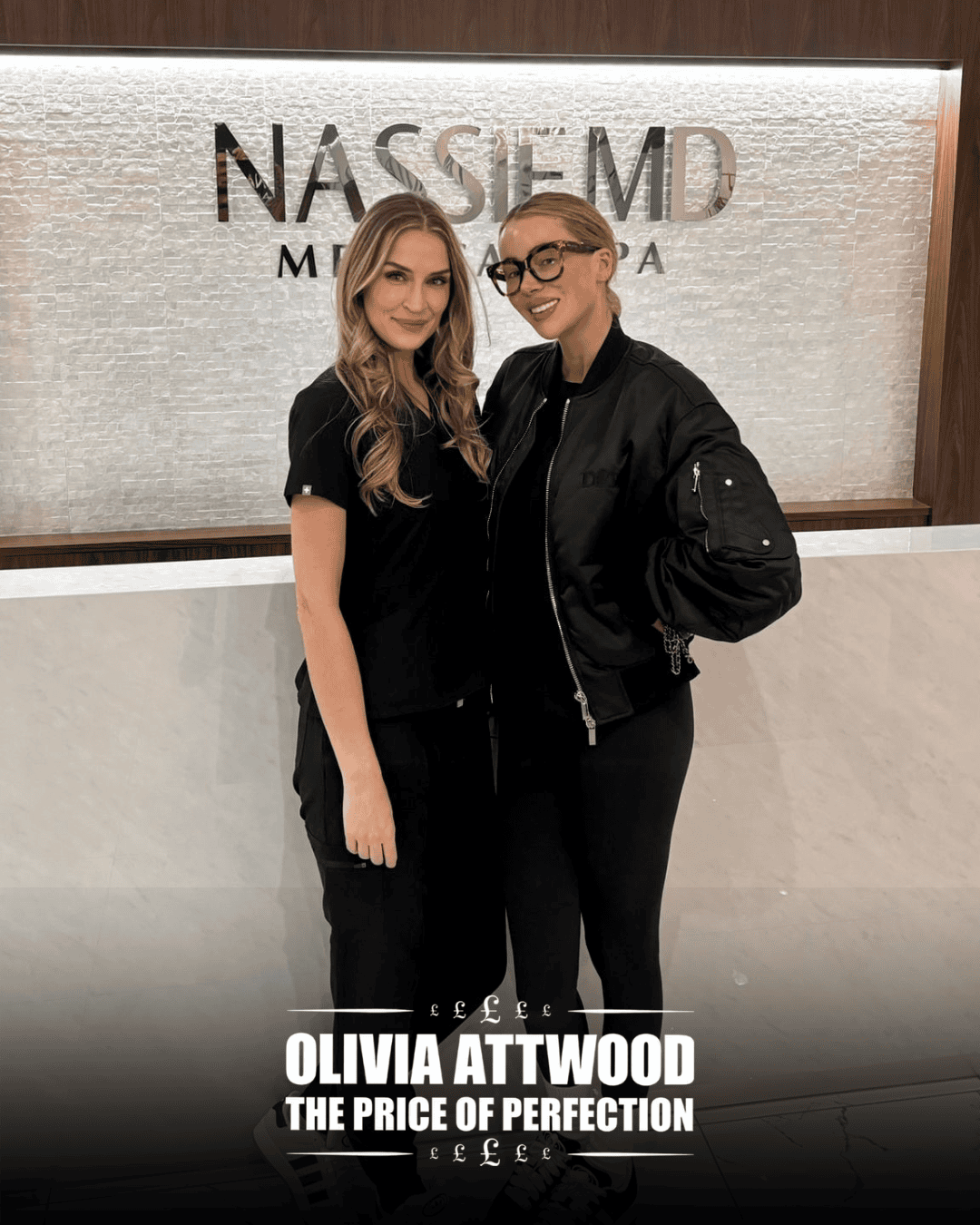
Following our feature on the Mummy Makeover episode of Olivia Attwood: The Price of Perfection, we wanted to share more about Sam’s treatment journey at Nassif Medical Spa.
Sam’s journey after having her first child
When Sam came to us, she had recently had her first child and was left with changes to her stomach that she hadn’t expected to be able to treat.
She had developed stretch marks during pregnancy and was also left with a C section scar. While she knew these changes were a normal part of pregnancy and childbirth, she was surprised to discover that there were treatments available that could help improve their appearance.
For Sam, the biggest question was what could actually be done and when she could start.
How soon can you treat a C section scar?
One of the things that surprised Sam during her consultation was how soon treatment can potentially be considered after a C section.
Many women wait years before seeking treatment for their scar simply because they don’t realise they can do anything about it sooner. There is a common assumption that you have to wait until a scar is fully mature before treatment can begin.
In suitable cases, however, treatment can be considered as soon as the stitches have been removed and the area has healed appropriately. This doesn’t mean that every C section scar should be treated immediately, as healing and recovery vary from person to person, but early assessment can be worthwhile.
For Sam, this was an important part of understanding what was possible. Rather than simply accepting the scar and waiting for years, she was able to explore treatment once her skin was suitable.
Looking beyond the surface of a C section scar
A C section scar isn’t always just a mark on the surface of the skin.
As a scar heals, there can be changes to its colour, texture and appearance, as well as changes within the deeper tissue. Some scars can appear darker or redder than the surrounding skin, while others may feel tight, uneven or indented.
This is why Sam’s treatment involved BBL, HALO and ProFractional, with each technology being used for a different aspect of her skin.
We began with BBL, a light based treatment that can help target visible redness and pigmentation where appropriate.
Sam then had HALO, a hybrid laser that combines two wavelengths to work at different levels within the skin, treating both the C section scar and her stretch marks. One part of the treatment works more superficially to resurface the skin, while the other delivers controlled heat deeper into the skin to stimulate collagen production and remodeling.
The final treatment, ProFractional, was used specifically on the C section scar because of the deeper nature of the scar tissue. It creates precise microscopic treatment zones within the skin, stimulating the body’s natural healing response and encouraging collagen remodeling. By treating within the scar tissue rather than simply working on the surface, ProFractional can help improve the texture and flexibility of the scar, as well as its overall appearance. For some patients, improving the quality of the scar tissue may also help with feelings of tightness or pulling.

What can laser treatment actually achieve?
The aim of treatment isn’t to erase a C section scar completely. Instead, we are looking to improve the quality, texture and overall appearance of the skin.
Depending on the individual scar, treatment can help make it appear smoother, softer and less noticeable over time. The same applies to pregnancy stretch marks: the goal is improvement rather than promising that they will disappear completely.
Sam’s treatment is a good example of why there isn’t necessarily a one size fits all approach to C section scar treatment. Different aspects of the skin can require different technologies, and the appropriate combination will depend on how the scar has healed and what you want to improve.
If you’ve had a C section and have been left with a scar that you’re unhappy with, or you’ve developed stretch marks during pregnancy, you may have more options than you realise.
Many women spend years assuming that they simply have to live with these changes. An assessment can help determine whether treatment is appropriate and, importantly, when it is safe to start.