
11 February 2026
Lymphatic Drainage Massage: What It Is, How It Works & Why It’s More Than Just a “Detox”
Lymphatic Drainage Massage: Benefits and Treatment in Manchester
Lymphatic drainage massage has become increasingly popular among our patients at NassifMD. However, beyond the trend, many people still ask what it actually does.
At its core, it is a clinically informed technique that supports the body’s lymphatic system. This system plays a key role in immune function, inflammation control and fluid balance.
When performed correctly, the treatment is structured, targeted and purposeful. It is not a standard relaxation massage. Instead, it is a specialised technique grounded in physiology.
What Is the Lymphatic System?
The lymphatic system is a network of vessels and lymph nodes that runs throughout the body. It supports several essential functions.
For example, it helps to:
- Remove waste products and excess fluid
- Support immune function
- Regulate inflammation
- Maintain fluid balance
- Assist natural detoxification processes
Unlike the circulatory system, the lymphatic system does not have a central pump. Instead, it relies on movement, breathing and manual stimulation to circulate effectively.
As a result, when lymph flow slows down, it can lead to a range of concerns.
What Happens When Lymphatic Flow Slows?
When the lymph system becomes sluggish, fluid and waste can build up.
This may contribute to:
- Facial puffiness
- Abdominal bloating
- Heavy or tired legs
- Fluid retention
- Post-treatment swelling
- General inflammation
Because of this, supporting lymphatic flow can make a noticeable difference in how the body feels and looks.
What Is Lymphatic Drainage Massage?
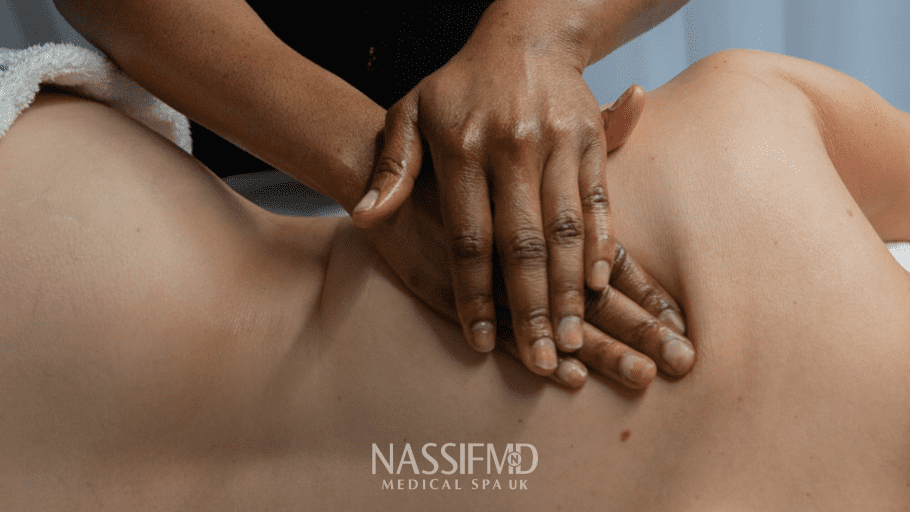
Manual lymphatic drainage is a gentle and highly controlled technique. It uses light, rhythmic movements to stimulate lymph flow and encourage drainage toward the lymph nodes.
Importantly, this treatment is:
- Not deep tissue
- Not forceful
- Not painful
The pressure remains very light because lymph vessels sit just beneath the skin. In fact, too much pressure can reduce effectiveness by compressing the vessels.
Therefore, technique and precision are essential.
Key Benefits of Lymphatic Drainage
Reduces Swelling and Fluid Retention
One of the most immediate benefits is reduced puffiness. This is especially noticeable in the face, abdomen and legs.
As a result, it is particularly helpful for:
- Clients prone to fluid retention
- Travel-related swelling
- Hormonal bloating
- Post-procedure oedema
Many clients choose lymphatic drainage before events to achieve a more sculpted and defined appearance.
Supports Post-Treatment Recovery
Lymphatic drainage often plays a role in recovery after aesthetic treatments.
It can help to:
- Reduce swelling
- Improve comfort
- Support healing
- Minimise prolonged inflammation
For example, after laser treatments or injectables, improved lymphatic flow can assist the body’s natural recovery process.
Improves Skin Clarity and Definition
As lymph circulation improves, many clients notice visible changes in their skin.
These may include:
- Reduced under-eye puffiness
- Sharper facial contours
- Brighter complexion
- Less congestion
Because of this, lymphatic drainage works well alongside advanced skin treatments.
Supports Overall Balance
The lymphatic system also connects closely to immune and inflammatory responses.
By supporting this system, clients may experience:
- Reduced systemic inflammation
- Improved circulation
- A general sense of lightness
While it is not a medical treatment, it can complement a wider wellness or aesthetic plan.
Who Is Lymphatic Drainage Suitable For?
This treatment may be suitable for:
- Post-surgical patients
- Clients undergoing aesthetic treatments
- Individuals with persistent puffiness
- Those with sedentary lifestyles
- Clients preparing for events
However, it is not suitable for everyone.
When Should You Avoid Treatment?
Certain conditions require caution or may prevent treatment.
These include:
- Active infections
- Certain heart conditions
- Untreated malignancy
- Acute thrombosis
For this reason, we always carry out a thorough consultation before treatment.
What Happens During a Session?
A typical session involves:
- Gentle, rhythmic movements
- Structured techniques following lymphatic pathways
- Targeted drainage toward key lymph node areas
The treatment takes place in a calm, controlled environment.
Most clients find it deeply relaxing. In many cases, they also notice an immediate feeling of lightness.
How Many Sessions Will You Need?
The number of sessions depends on your goals.
For example:
- Event preparation may require 1 to 2 sessions
- Post-treatment recovery often benefits from a short course
- Ongoing concerns may require maintenance sessions
We always recommend a personalised plan based on your needs.
For clients in Manchester, Cheshire and MediaCity, lymphatic drainage offers a structured and results-driven approach to managing swelling and inflammation.
When performed in a medical aesthetic setting, it becomes more than a wellness trend. Instead, it becomes part of a targeted treatment strategy.
If you are looking to support both your skin and overall wellbeing, lymphatic drainage may be a valuable addition to your routine.


